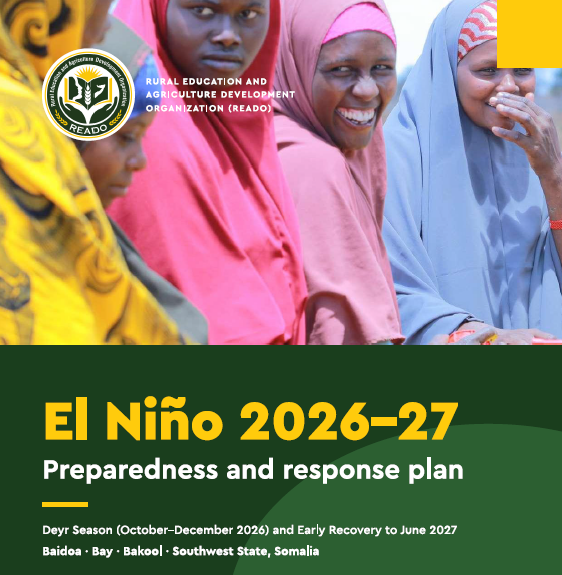

Baidoa, Somalia — The Rural Education and Agriculture Development Organization (READO) has developed its El Niño 2026–27 Preparedness and Response Plan to strengthen anticipatory action, emergency preparedness and early recovery across its operational areas in Baidoa, Bay, Bakool and Gedo.
The plan is guided by a simple principle: “Act before the water rises.”
As Somalia enters the October–December 2026 Deyr season, communities across several READO operational areas face heightened risks associated with flooding, displacement, disruption of essential services, damage to livelihoods and increased public health and nutrition concerns.
The plan therefore focuses on acting early—using verified early-warning information to trigger preparedness measures before conditions deteriorate.
Under the central planning scenario, READO is preparing to reach approximately 150,000 people, with at least 50 percent of those reached expected to be women and girls. The response framework brings together actions across Water, Sanitation and Hygiene (WASH), health, nutrition, food security and livelihoods, protection, education in emergencies and early recovery.
From early warning to early action
A central element of the plan is the establishment of clear early-warning triggers and decision-making protocols.
Depending on the level of risk, READO will be able to activate measures including community warning systems, pre-positioning of essential supplies, protection of water points and other critical infrastructure, anticipatory cash support, rapid assessments and emergency response.
Once a significant impact is confirmed, the plan sets a target of beginning emergency assistance within 72 hours.
READO is also strengthening preparedness at community level through flood-risk mapping, identification of safe spaces and evacuation routes, community focal points, preparedness messaging and measures to ensure that women, children, older people, persons with disabilities and displaced communities are considered throughout preparedness and response activities.
Protecting essential services and livelihoods
The plan recognises that flooding affects more than homes and infrastructure. It can interrupt health and nutrition services, contaminate water sources, disrupt children’s education, damage crops and livestock, restrict access to markets and increase protection risks.
READO’s preparedness measures therefore aim to keep essential services functioning while protecting household assets and supporting communities to recover as quickly as possible.
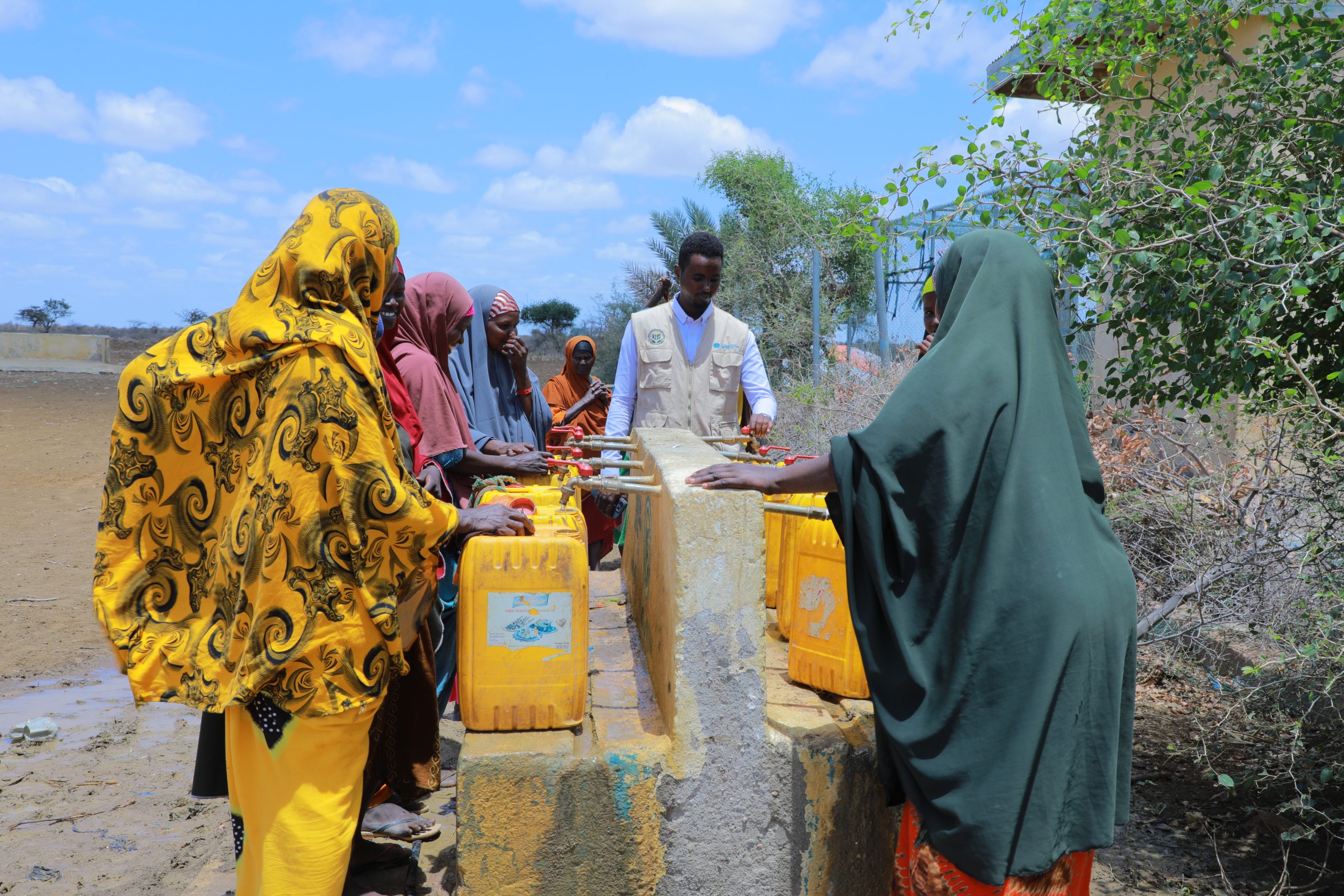
Sector-specific actions include protecting and chlorinating water points, maintaining health and nutrition services, supporting vulnerable households through cash and livelihood assistance, maintaining safe learning opportunities for children and strengthening protection and referral mechanisms.
A US$5 million preparedness and response framework
READO estimates an indicative requirement of approximately US$5 million for the central preparedness and response scenario through June 2027.
The funding framework covers anticipatory action, emergency response and early recovery, including cash assistance, WASH, health and nutrition, protection, livelihoods, education in emergencies, coordination, monitoring and operational preparedness.
READO will work closely with government authorities, humanitarian coordination structures, communities, existing partners and donors to mobilise resources and align response activities with wider humanitarian efforts.
Preparedness saves lives
For READO, preparedness is not simply about responding faster once flooding occurs. It is about reducing the impact of a crisis before it reaches its worst point.
By strengthening early warning, preparing communities, protecting essential services and positioning resources closer to areas at risk, READO aims to reduce preventable loss of life, protect livelihoods and help communities recover more quickly.
Act before the water rises.
That is the principle at the heart of READO’s El Niño 2026–27 preparedness and response approach.