

Why READO has joined 190 organisations calling on the world to fully fund education
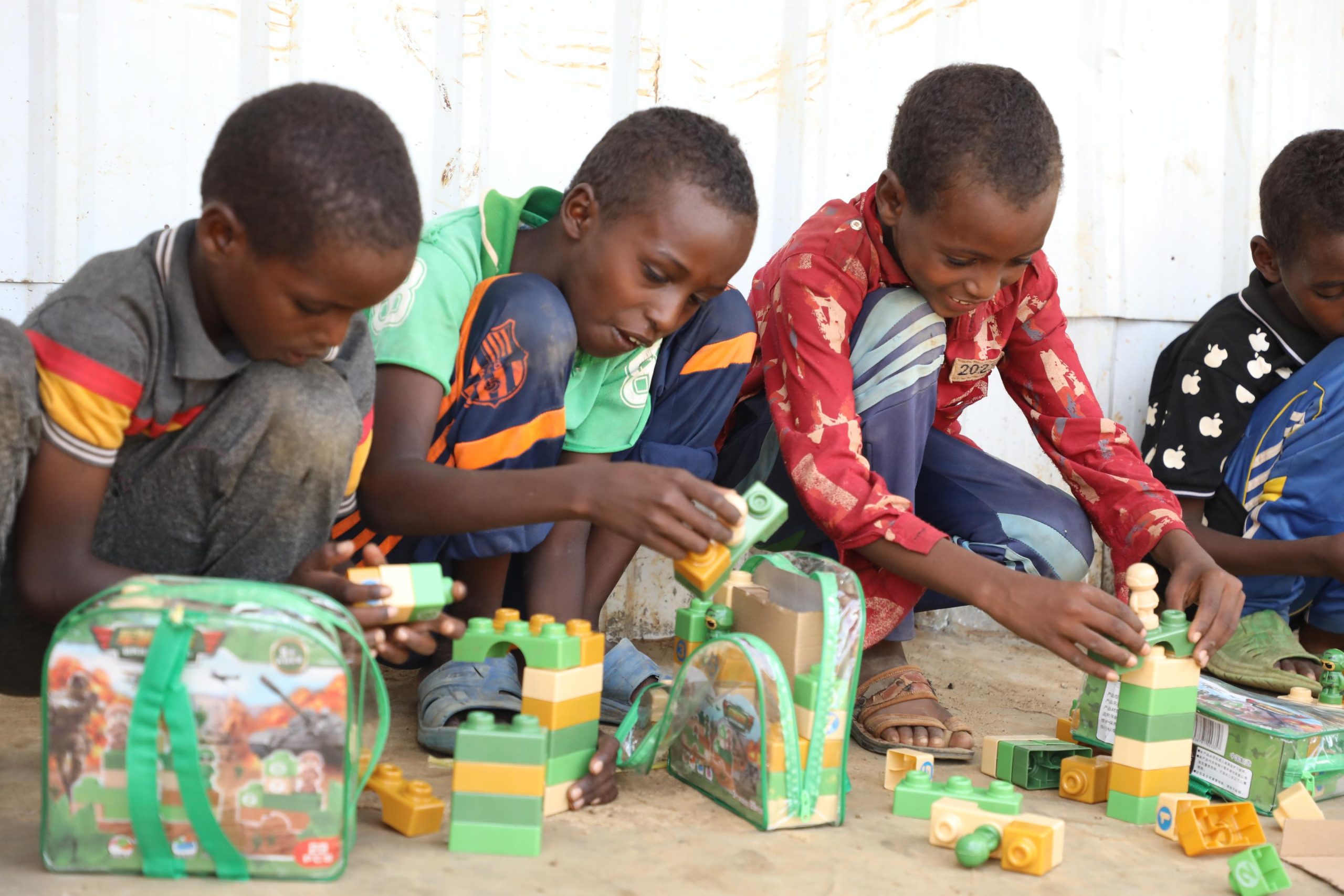
In Baidoa, on a quiet morning before the day’s heat sets in, a teacher unlocks the door of a Temporary Protection and Learning Space. Children file in. Some walked an hour to get there. Some slept in an IDP settlement that did not exist three weeks ago. Some have lost almost everything to the most recent drought.
For these children, the classroom is more than education. It is structure. It is safety. It is the one part of the day that does not move underneath them.
Today, in Somalia and across the world, classrooms like that one are at risk of going dark.
The crisis behind the call
Globally, more than 273 million children are out of school — and the number is rising. The annual financing gap for education is now estimated at US $97 billion, threatening decades of progress in girls’ education, foundational learning, and protection through schooling. In Somalia and across the Horn of Africa, recurrent drought, conflict and economic shocks are colliding with shrinking education and humanitarian budgets, and the children who pay the price are the ones least equipped to absorb it.
This is why this week, READO joined more than 190 global partners and coalitions — representing over 16,000 local, national and international organisations — in endorsing the Joint Open Letter on Education Financing, calling on world leaders and donors to act now.
The letter — co-coordinated by Save the Children and Plan International — urges decision-makers to:
- Fully fund the Global Partnership for Education (GPE) and Education Cannot Wait (ECW) at levels that match the scale of today’s crisis.
- Protect and expand both domestic and international education financing.
- Prioritise financing that meets the diverse and intersecting needs of children, young people, students and teachers — especially in displacement, conflict and climate-affected settings.
Why this matters at READO
Education is not an add-on to READO’s work. It is the first word in our name — the E in Rural Education and Agriculture Development Organization. We have served Somalia since 2008, and across seventeen years of frontline operations the case for education in crisis has only grown stronger.
In Bay and Bakool regions, where READO serves as the Education Cluster regional focal point, our schools and learning spaces sit at the intersection of every pressure displaced families face. We run school feeding as the primary tool for keeping girls enrolled through drought; Temporary Protection and Learning Spaces for displacement surges; accelerated learning programmes for children whose education was disrupted; female-teacher mentorship; classroom rehabilitation; learning-material distribution; and an eight-week psychosocial-support curriculum embedded directly into our schools. Mother-led cooking committees keep school feeding running. Anticipatory Action in Education in Emergencies pre-positions us before the next climate shock.
Just last week, we completed a four-day capacity-building training with Plan International and funding from 🇪🇺 ECHO for 27 teachers and Community Education Committee members drawn from 12 Temporary Protection and Learning Spaces in Baidoa — on Mental Health and Psychosocial Support, Child Protection, Safeguarding and Gender-Based Violence prevention. These are the frontline responders for displaced children. Every dollar invested in their capacity ripples out across hundreds of classrooms.
This is what is at stake when education financing shrinks. Not abstractions. Actual teachers. Actual classrooms. Actual children.
A call we could not stand outside of
For a Somali national NGO rooted in seventeen years of frontline work, joining a global coalition of 16,000 organisations is more than a signature. It is a statement of where we believe the levers of change actually sit.
The humanitarian system can deliver the school feeding, the safe learning spaces, the trained teachers and the protection mechanisms. But none of it scales — and none of it survives the next funding cycle — unless the global architecture for education financing is protected and expanded. The Global Partnership for Education and Education Cannot Wait are the two mechanisms doing exactly that work at scale. They need to be fully funded.
The G7, the G20 and the UN General Assembly are around the corner. The world’s leaders have a choice to make about what kind of decade comes next. Together with 190 partners and 16,000 organisations, we are asking them to choose education.
What you can do
- Read and share the letter. Available in English, French and Spanish. [Insert link on publication]
- Use the hashtag #FundEducation across your platforms.
- Tag the institutions that need to hear this — @GPforEducation, @EduCannotWait, your national Ministry of Education, your country’s ECHO / USAID / FCDO contacts.
- Talk to a decision-maker. Reference the letter in your next meeting with a donor, parliamentarian or government official.
- Stand with us. If you are an organisation that has not yet endorsed the letter, your voice would strengthen this collective call.
In a Baidoa classroom, a teacher is doing her part. The world’s leaders need to do theirs.
No Funding. No Learning. No Chance.
#FundEducation
READ THE LETTER HERE
https://readosom.org/wp-content/uploads/2026/06/Education-Sign-on-letter_ENG.pdf

